Klarna Pay in 3 Review UK: Costs, Credit Checks and Gift-Buying Risks

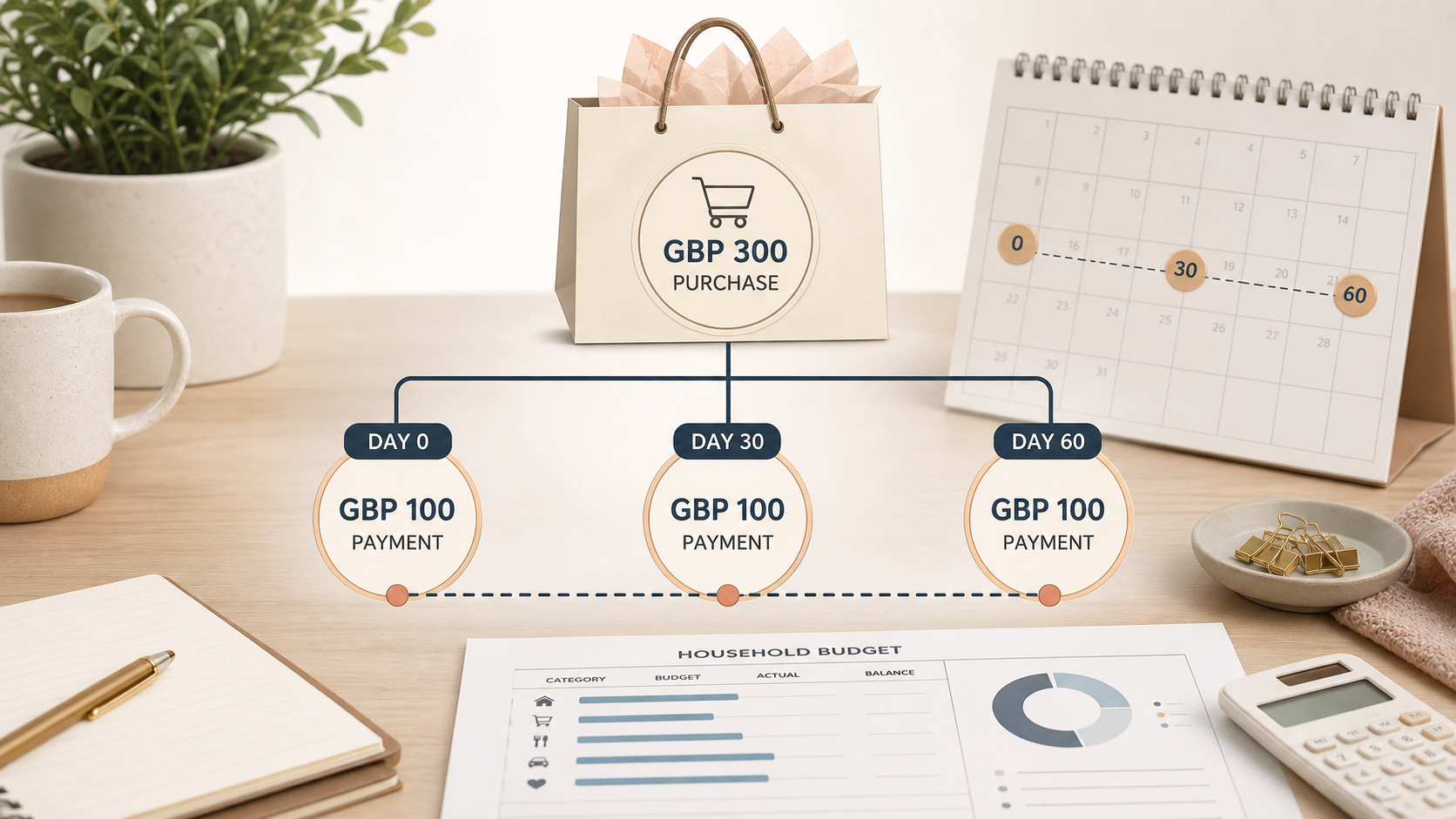
A £300 gift can feel like a £100 purchase when the checkout only asks for the first instalment. The other £200 has not disappeared. It has been moved onto two future dates, when rent, energy, travel and other credit payments may also be due.
The central conclusion of this Klarna Pay in 3 review UK shoppers should understand is simple: the product can spread one retail purchase across roughly 60 days at 0% interest, but it is still credit. Its usefulness depends on whether all three payments already fit your budget, not on whether the first payment looks affordable.
Make Payday Today may earn a commission from some provider links. Our editorial policy explains how commercial relationships are separated from editorial judgements, while our about page explains who the site serves. We have not applied for or personally tested Klarna Pay in 3. This review uses provider documents, regulator guidance and independent consumer information checked on 10 July 2026.
A significant rule change is close. Deferred Payment Credit is due to enter FCA regulation on 15 July 2026. Agreements made before that date remain under the earlier position, so check the date and terms of your own agreement rather than assuming new protections apply retrospectively.
Klarna Pay in 3 review UK: what the product is
Klarna Pay in 3 is a retail credit product provided by Klarna. It lets an eligible UK shopper split a purchase into three equal payments. The first is normally collected when the purchase is made, the second around 30 days later and the final payment around 60 days after the purchase date.
The credit is connected to a purchase. It is not unrestricted cash for rent, council tax, energy bills or another lender. Klarna is the credit provider rather than the retailer selling the gift, jewellery, clothing or accessory.
Official Klarna disclosures describe Pay in 3 as completely interest-free. That means a purchase of £300 should involve three £100 payments and a £300 total repayment if every payment is made as agreed and no other charge applies.
Do not confuse Pay in 3 with Klarna Financing, the Klarna Credit Card or other plans that can have different terms, longer repayment periods or interest. The product name on the checkout and agreement matters more than the general Klarna brand.
Klarna says applicants must be at least 18 and UK residents. The product is subject to status, and seeing it at one checkout does not guarantee that another order will be approved.
How the three Klarna payments affect your budget
The payment structure is straightforward, but the affordability test needs more thought.
For a £300 purchase:
| Payment | Approximate timing | Amount |
|---|---|---|
| First instalment | Purchase date | £100 |
| Second instalment | 30 days later | £100 |
| Final instalment | 60 days later | £100 |
| Total if paid as agreed | About 60 days | £300 |
The table does not make the purchase cheaper. It changes when the money leaves your account.
Before using Pay in 3, put all three dates into the same budget as rent, mortgage, council tax, energy, food, travel, childcare and existing repayments. If the second payment would require an overdraft, another BNPL order or missed priority bill, the purchase is not affordable merely because the first instalment succeeds.
Klarna says payments are normally collected from the debit or credit card supplied at checkout. Paying an instalment with a credit card can transfer the debt to that card rather than resolving it. Interest may then arise under the card agreement if its balance is not cleared.
Does Klarna Pay in 3 charge interest or fees?
Klarna currently describes Pay in 3 as three interest-free payments and permits merchants to use the wording “0% interest”. No separate representative APR was identified in the current Pay in 3 source pack, so this review does not invent one.
Klarna's current UK marketing disclosures also warn that terms and late fees may apply. The exact fee should be checked in the agreement shown for your purchase because product terms can change and may differ from other Klarna products.
Record these figures before accepting:
- cash price of the goods;
- first payment;
- second and final payment dates;
- total amount repayable;
- any late fee;
- what happens after a failed collection;
- whether paying with a credit card creates another interest cost; and
- how returns affect the payment schedule.
An interest-free agreement can still cause financial harm if it encourages a purchase that would not otherwise be made or if several small plans overlap.
Klarna credit checks and approval
Klarna says every Pay in 3 order is assessed individually. Purchase amount, previous order history, identity information and the shopper's financial situation may be considered.
The provider's Pay in 3 FAQ confirms that a credit search takes place. Klarna's UK store disclosures describe the search for its short BNPL options as a soft credit check, while longer Financing products can involve a hard check. Always verify which product is being offered before continuing.
A soft search generally does not leave the same visible application footprint as a hard search, but it does not guarantee approval. Klarna can accept one order and decline another. Paying previous plans on time also does not create a guaranteed spending limit.
Approval is not proof of affordability. A lender's automated decision cannot know every upcoming bill, income reduction or household emergency. The borrower still needs to decide whether the three payments are sustainable.
If your application is declined, avoid immediately submitting several applications to other providers. First check the purchase is necessary, review your credit report for errors and compare non-credit routes.
Using Klarna for gifts, jewellery and accessories
Gift buying creates a particular risk because the emotional deadline can feel more urgent than the financial need. A birthday, wedding or Christmas date may encourage a shopper to treat instalments as extra budget.
Pay in 3 can be manageable when the money for all three payments is already available and the schedule is being used only for timing. It becomes riskier when the future payments depend on next month's income having no surprises.
Jewellery and fashion accessories also create return complications. The retailer controls whether an item meets its return policy, while Klarna controls the payment plan. Returning the parcel does not automatically prove that Klarna has received the retailer's confirmation.
Klarna's official FAQ says future scheduled payments are cancelled and collected amounts refunded after the merchant confirms an accepted cancellation or return. It says the refund is normally processed within five business days after that registration.
Keep the order confirmation, return tracking and merchant acceptance. Check the Klarna payment schedule rather than assuming a posted return has stopped the next collection.

Returns, refunds and purchase disputes
If goods do not arrive, Klarna says the shopper can contact customer service and may be able to postpone the due date or put the order on hold while the issue is investigated. This is useful, but it depends on taking action before a payment silently becomes overdue.
A community discussion in UKPersonalFinance describes a disputed retailer return, chargeback and an overdue Klarna balance. It is one unverified account, not evidence of a general failure rate. Its value is narrower: retailer refunds, card chargebacks and the Klarna credit agreement can become three separate records that need to be reconciled.
Do not use a chargeback as a substitute for informing Klarna. Contact both the retailer and Klarna, explain the status in writing and ask whether the payment schedule is paused. Keep evidence until the Klarna balance and bank transactions are both correct.
For purchases made before 15 July 2026, MoneyHelper notes that current short BNPL agreements do not provide the same Section 75 route as a conventional direct credit-card purchase. This is one reason to check the agreement date and buyer-protection terms.
Missed payments and credit-file risk
Klarna's current Pay in 3 FAQ says that when collection fails on the due date, it may try again seven days later and make another attempt seven days after that. It may also continue trying to collect overdue amounts, invoice the unpaid balance or refer the debt to a collection agency.
Missed payments may be shared with credit reference agencies. That can make future credit more difficult or expensive, even though the original purchase was interest-free.
The practical response is to contact Klarna before the due date if the card has changed, income has fallen or a priority bill must be paid first. Ask what support is available, whether the schedule can change and how the account will be reported.
Do not ignore reminders because the amount is small. Multiple £30 or £50 instalments across different purchases can combine into a much larger monthly obligation.
Early repayment and cancellation caveats
Klarna's Pay in 3 FAQ says a customer can pay before the due date through the Klarna app or website. Because the product is already interest-free, early payment does not create an interest saving in the way it might on an interest-bearing loan.
It can still reduce administrative risk by removing a future collection date. Check that the early payment has been applied to the correct order and that the remaining schedule has updated.
Cancellation of the goods and withdrawal from the credit agreement are related but not always identical steps. Follow the retailer's return procedure and report the return to Klarna. Do not merely remove the payment card or delete the app.
If a merchant rejects a return, the remaining credit obligation may continue until the dispute is resolved. Get the reason in writing and use the formal complaint route if necessary.
What changes on 15 July 2026?
The Financial Conduct Authority says it will start regulating Deferred Payment Credit on 15 July 2026.
For qualifying agreements entered into from that date:
- lenders must check whether the borrower can afford repayment;
- pre-contract information must explain the amount borrowed, repayment dates, payment amounts, fees and protections;
- firms must support customers who struggle to pay;
- eligible complaints can be referred to the Financial Ombudsman Service; and
- Section 75 may apply when its conditions are met.
An agreement entered into before 15 July remains unregulated under the earlier DPC position. Having instalments due after 15 July does not convert an older agreement into a newly regulated one.
This page therefore needs an early refresh after commencement. Readers should check Klarna's current agreement and the FCA Firm Checker rather than relying on screenshots or summaries created before the change.
Complaints context
Klarna says customers should contact its customer service first. For standard Pay in 3 complaints under the current pre-15-July position, its complaints page generally directs unresolved cases to Klarna's Complaints Adjudicator after the provider issues a final response.
The adjudicator is separate from the normal customer-service team, but it is still a Klarna-created route. It is not the same as the statutory Financial Ombudsman Service.
For qualifying agreements made from 15 July 2026, the FCA says borrowers will be able to take eligible unresolved complaints to the Financial Ombudsman. The agreement date and complaint subject will determine which route applies.
A useful complaint should include:
- order number and agreement;
- payment schedule;
- bank transactions;
- return tracking and retailer confirmation;
- screenshots or emails showing an order hold;
- credit-report entries; and
- the outcome requested.
How Klarna compares with existing borrowing routes
Klarna Pay in 3 is structurally different from a payday loan. It finances a retail purchase, uses three short instalments and currently charges 0% interest when the plan is followed. It does not provide cash for bills or general emergencies.
Our UK payday loan alternatives guide covers credit unions, employer support, payment plans and free debt advice for readers whose need is not a retail checkout purchase.
Salary Finance is employer-linked personal borrowing with payroll deductions and a longer repayment obligation. It may cover needs that BNPL cannot, but it can also create interest cost and employment-change risk.
Creditspring uses a membership and fixed-fee structure. Its cost should be compared using the total usable borrowing and total fees rather than an interest label.
Fair for You provides regulated product-linked credit for household essentials. It can be relevant for an appliance or furniture need, but the cash price, APR and total repayment must be compared.
These products are not interchangeable. Choose by the real need, total repayment, repayment dates, regulatory protection and consequences of a missed payment.
Who Klarna Pay in 3 may suit
Pay in 3 may be worth considering when:
- the purchase is planned rather than impulsive;
- all three payments already fit the budget;
- the total remains equal to the cash price;
- the shopper understands the return process;
- there are no priority-bill arrears; and
- the plan is not being stacked with several other BNPL agreements.
The product may help with timing. It should not be used to create spending capacity that the household does not have.
Who should avoid or pause
Pause if:
- the first instalment is affordable but the next two are uncertain;
- the purchase is mainly driven by a gift deadline or checkout promotion;
- rent, council tax, energy or another priority bill is overdue;
- another BNPL plan will still be open;
- repayment would depend on an overdraft or credit card balance;
- the retailer's return policy is unclear; or
- you are relying on approval as evidence that the purchase is safe.
If the underlying problem is an ongoing income shortfall, BNPL only moves part of the pressure into the following two months. Free debt advice or a payment arrangement for an essential bill may be more useful.
Klarna Pay in 3 checklist
Before accepting, answer:
- Would I still buy this item without Pay in 3?
- What are the exact three payment dates?
- What is the total amount repayable?
- Does any late fee apply?
- Is this Pay in 3 or another Klarna product?
- Will each payment fit after priority bills?
- Do I have other BNPL agreements?
- What credit search will be used?
- How do I report a return or missing order?
- Was the agreement made before or after 15 July 2026?
If any answer is unclear, pause at checkout.
Final verdict
Klarna Pay in 3 is easier to understand than many high-cost short-term loans: one retail purchase, three equal payments and 0% interest when the agreement is followed. That simplicity does not make the future payments optional.
For gifts, jewellery and accessories, the main risks are overspending against an emotional deadline, stacking several plans and assuming a posted return has already stopped the payment schedule. Use the product only when all three instalments already fit, and keep the retailer and Klarna records until the purchase is fully settled.
FAQ
Is Klarna Pay in 3 a loan?
It is a form of credit tied to a retail purchase. Klarna pays the retailer and the shopper repays Klarna in three instalments. It is not unrestricted cash, but missed payments can still create arrears and affect future access to credit.
Does Klarna Pay in 3 charge interest?
Klarna currently describes Pay in 3 as completely interest-free. If a £300 purchase is repaid as agreed, the three instalments should total £300. Check the agreement for any late fee and confirm that the checkout has not offered a different Klarna product.
Does Klarna Pay in 3 perform a credit check?
Klarna confirms that a credit search takes place and describes the check for short BNPL options as soft. Each order is assessed separately, and previous approval does not guarantee another order will be accepted.
What happens if I miss a Klarna Pay in 3 payment?
Klarna may attempt collection again, contact you, report missed payments to credit reference agencies or refer an unpaid debt for collection. Contact the provider before the due date if you expect difficulty rather than waiting for repeated failed collections.
Can I pay Klarna Pay in 3 early?
Yes. Klarna says payments can be made before the due date through its app or website. Check that the payment has been applied to the correct order and that the future schedule has updated.
What happens when I return an item bought with Klarna?
The retailer must confirm the accepted return to Klarna. Klarna then says it will cancel future payments and refund amounts due, normally within five business days after the store registers the return. Keep tracking and merchant confirmation until the balance is corrected.
Is Klarna Pay in 3 regulated by the FCA?
As checked on 10 July 2026, current short DPC agreements remain unregulated. Qualifying new agreements are due to enter FCA regulation from 15 July 2026. Agreements made before that date remain under the earlier position.
Title Candidates
- Klarna Pay in 3 Review UK: Costs, Credit Checks and Gift-Buying Risks
- Is Klarna Pay in 3 Worth It? Check These Costs and Risks
- Before Using Klarna for Gifts, Check the Three Payment Dates
- Klarna Pay in 3 Explained: Credit Searches, Refunds and Late Payments
- The 60-Day Klarna Cost Check UK Shoppers Should Make